
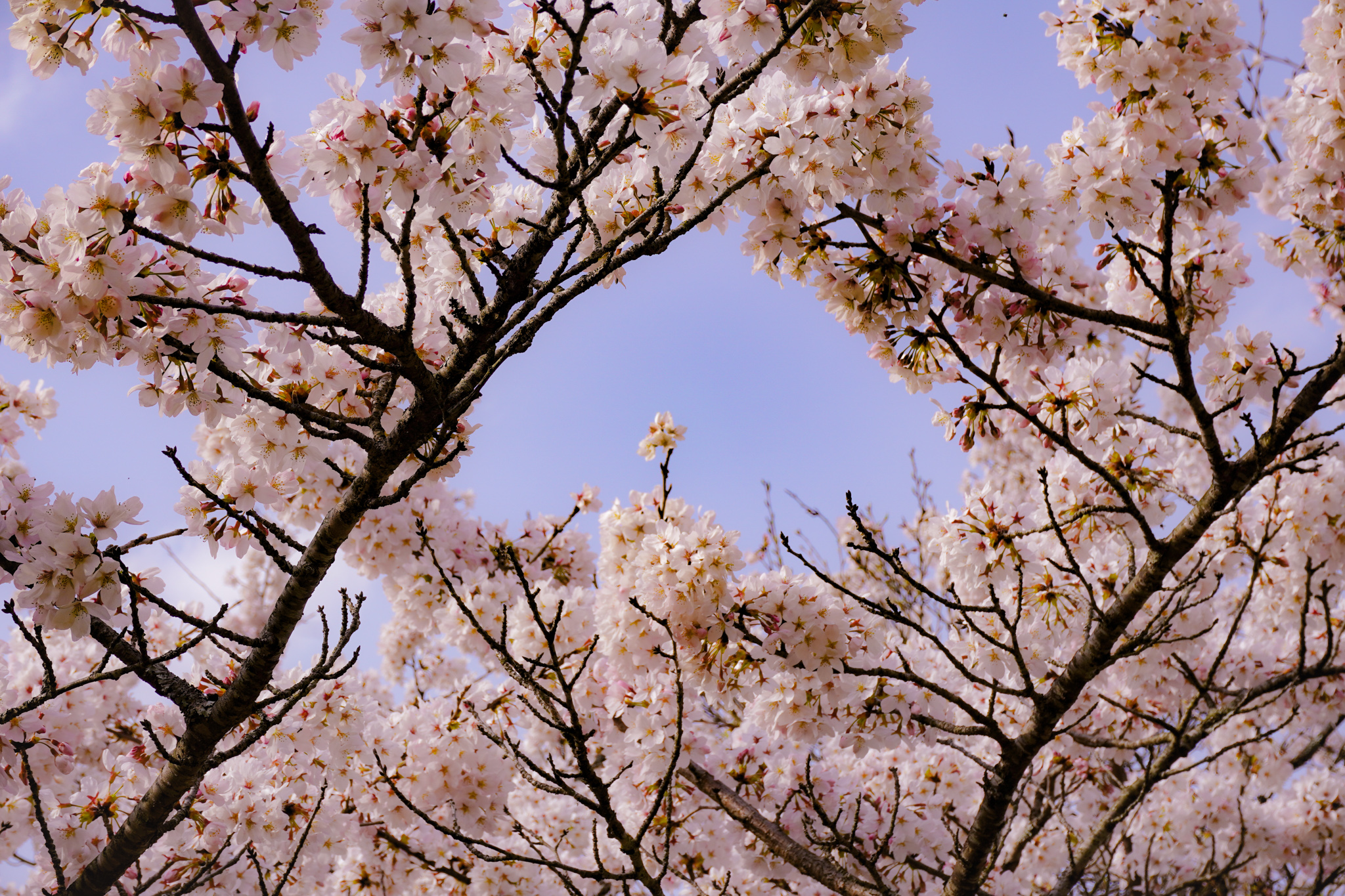
Hanami—the custom of viewing blossoms while enjoying the company of friends—is a “must-do” for any visitor travelling to Japan in spring. But as the most famous landmarks become crowded, the most rewarding Hanami experiences are often the quietest ones. In the stillness of the Tajima countryside, you can appreciate the poignant beauty of mono no aware (the pathos of things) as the pink petals dance toward the earth.
Yabu is home to some of the region’s best-kept secrets. From ancient trees to hidden riverside paths, here are our top picks for enjoying the cherry blossom season in northern Hyogo.
Hatakesaka Sakura Park
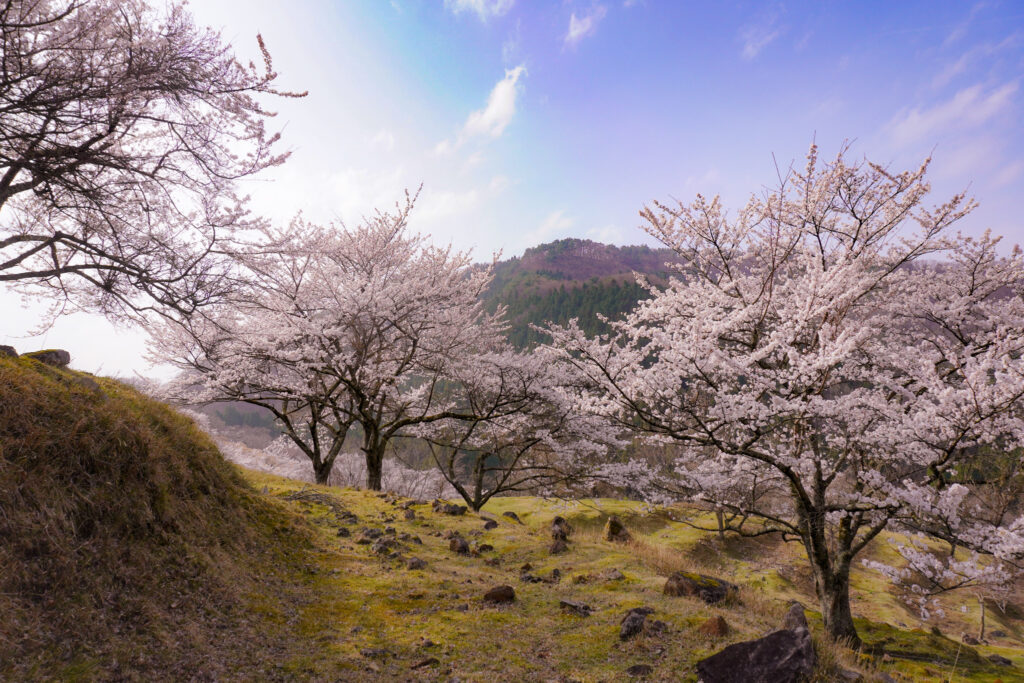
Once the site of ancient mulberry fields, the slopes of Hatakesaka have been reimagined as a cherry blossom paradise. Today, countless Somei-Yoshino trees paint the hillsides in soft pastels, creating a dreamlike atmosphere often described by visitors as a “pink cloud.”
This spot offers a rare glimpse into the authentic Tajima lifestyle. The same meadows that host delicate petals in April provide lush grazing for Tajima cattle in the summer months. Because the park sits at a higher altitude, it acts as the region’s “late-bloomer” destination—making it the perfect secret for tourists who arrived a bit late for the blossoms in Himeji or Kobe.
Tarumi-no-Oozakura (The Great Sakura Tree of Tarumi)
If Hatakesaka is a “pink cloud,” the Great Sakura Tree of Tarumi is a solitary, ancient guardian. As a designated National Natural Treasure, this isn’t just a tree—it is a thousand-year-old monument to resilience and the spiritual heart of Yabu’s cherry blossom season.
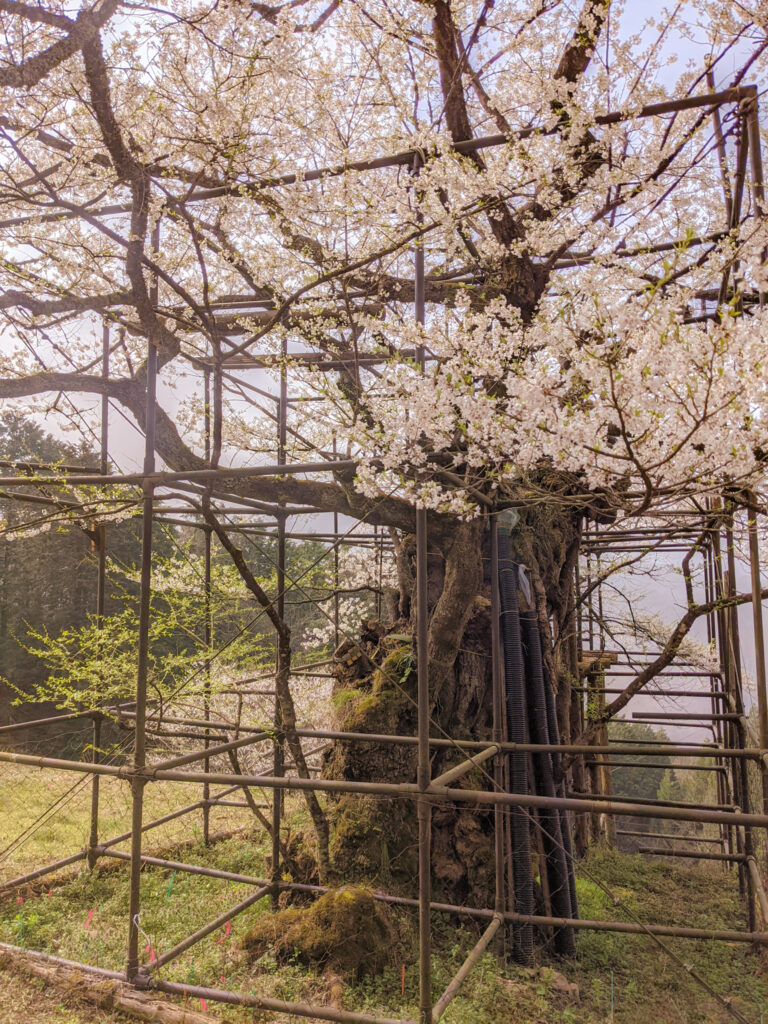
Fondly known as the “Sen-Sakura” (or Hermit Wise Sakura) by the locals, this is an Edohigan tree that reigns as the oldest and largest of its kind in Hyogo Prefecture. Reaching a height of 13.8 meters with a massive 6.3-meter trunk, its presence is so commanding that successive feudal lords of the Izushi Domain made special pilgrimages here to witness its bloom. It isn’t just a tree; it’s a living piece of history that has watched over the Tajima region for ten centuries.
Essential Visitor Tips
- The Hike: Wear comfortable walking shoes, as the trail is an ascent.
- Parking: A dedicated parking lot is located at the trailhead. However, it is quite popular on Saturdays and Sundays during peak bloom, so try to arrive early or visit on a weekday for a more tranquil experience.
- Current Status: As of the 2nd week of April, the Edohigan variety (which typically blooms slightly earlier than Somei-Yoshino) is in its full, majestic glory.
Osa River’s Cherry Blossoms
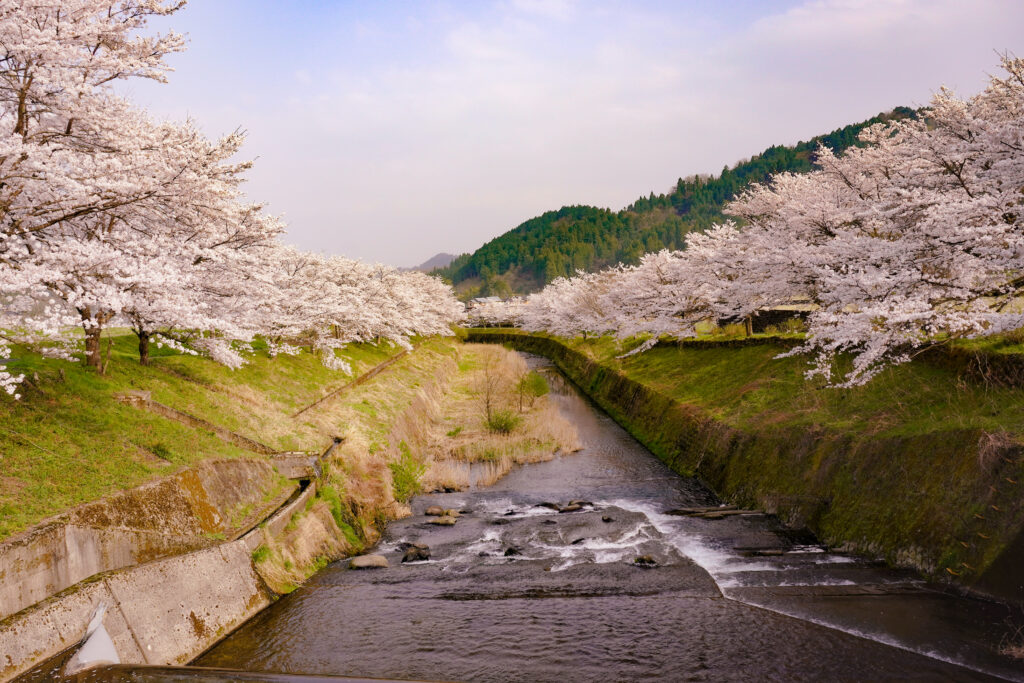
If you are looking for that quintessential Japanese spring scene—willowy cherry branches arching over a sparkling river—the Osa River in Yoka’s Kuroku area is your destination. This spectacular stretch of sakura trees offers a peaceful, long-distance stroll that feels worlds away from the packed riverbanks of Kyoto or Tokyo.
The stunning rows of trees you see today are part of an ambitious prefectural vision known as the “Furusato Sakura Tsutsumi Corridor.” Completed between 1991 and 2000, this project aimed to create a continuous “corridor” of cherry blossoms connecting the Seto Inland Sea in the south all the way to the Sea of Japan in the north. Walking here means you are stepping into a small piece of a grand, prefecture-wide floral highway.
For the ultimate photo opportunity, head to the Towa Bridge. From the center of the bridge, the view opens up into a 180° panorama of soft pink blossoms stretching to the left and right as far as the eye can see.
As you walk, you’ll catch the fresh, delightful spring breeze wafting in from the neighboring rice fields. It’s a sensory experience that perfectly captures the rural charm of Northern Hyogo—the scent of earth, the sound of flowing water, and the sight of endless petals.
The Shidare Cherry Blossom of Sahōji Temple
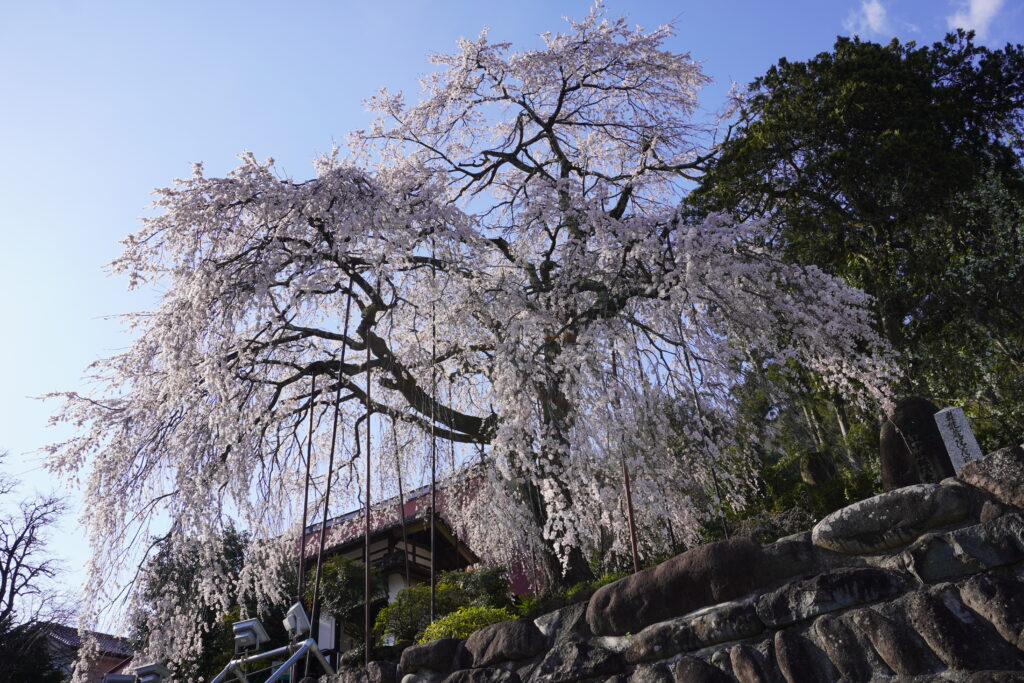
For a completely different silhouette, head to Saihōji Temple to witness the grace of its magnificent Shidare-zakura (weeping cherry tree). Unlike the upright trees found along the riverbanks, this variety features long, drooping branches that create a delicate curtain of blossoms, lending the temple grounds a serene and sacred atmosphere.
While the tree is a sight to behold in the daylight, it truly transforms after the sun sets. During the peak of the season, the tree is illuminated at night. The light catches the cascading pink blossoms, making the tree appear like a “shining star” against the backdrop of the dark temple architecture.
Though its exact origin is shrouded in mystery, this weeping cherry is estimated to be roughly 100 years old. In 2016, it was officially designated as a “Tree of Importance to the Landscape,” a title that recognizes its status as a treasured natural asset and a symbol of the local community’s dedication to preservation.
Experience the Soul of Tajima
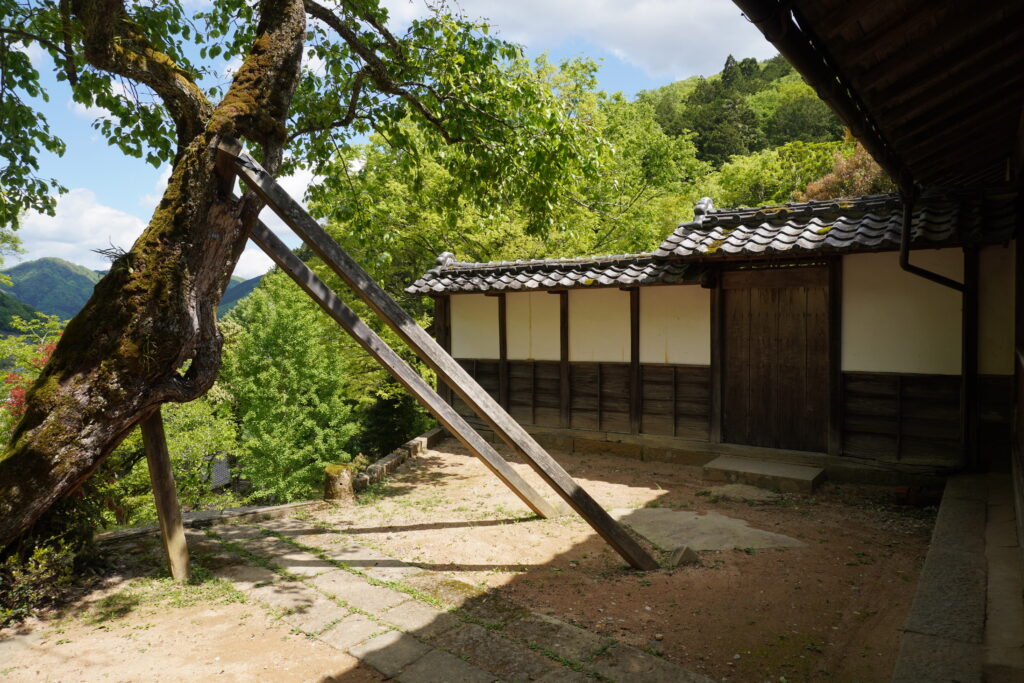
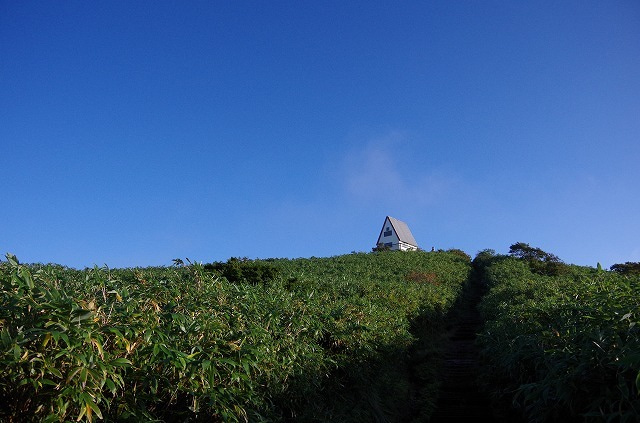
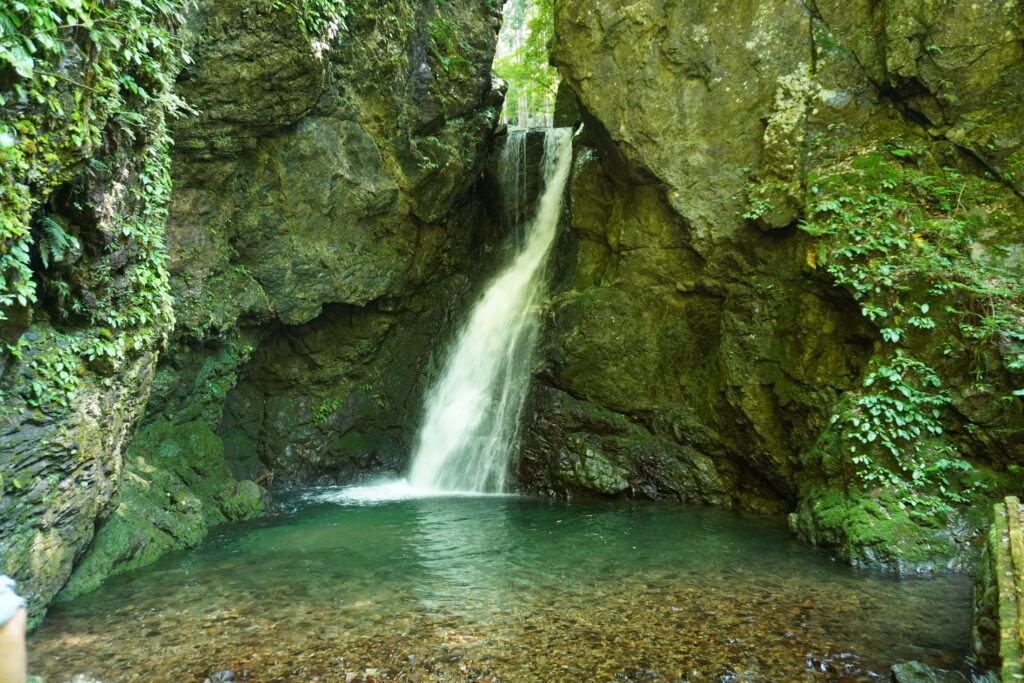
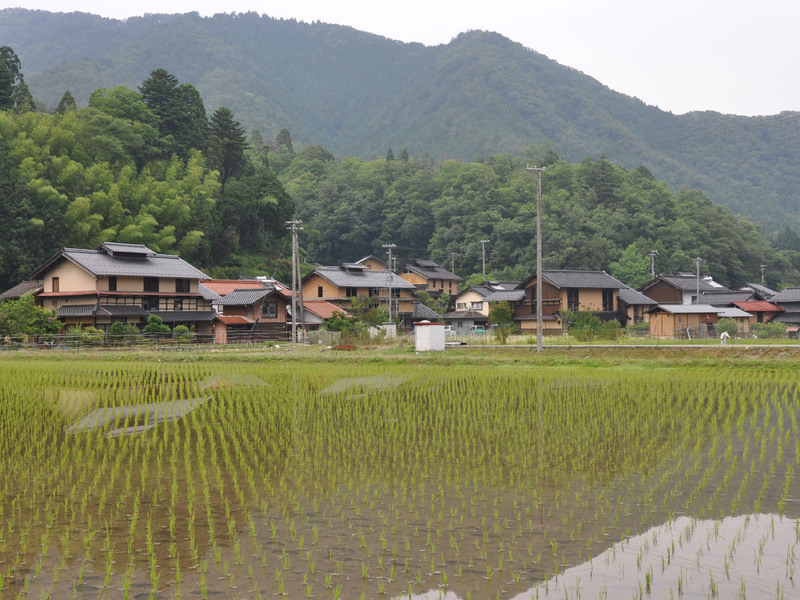
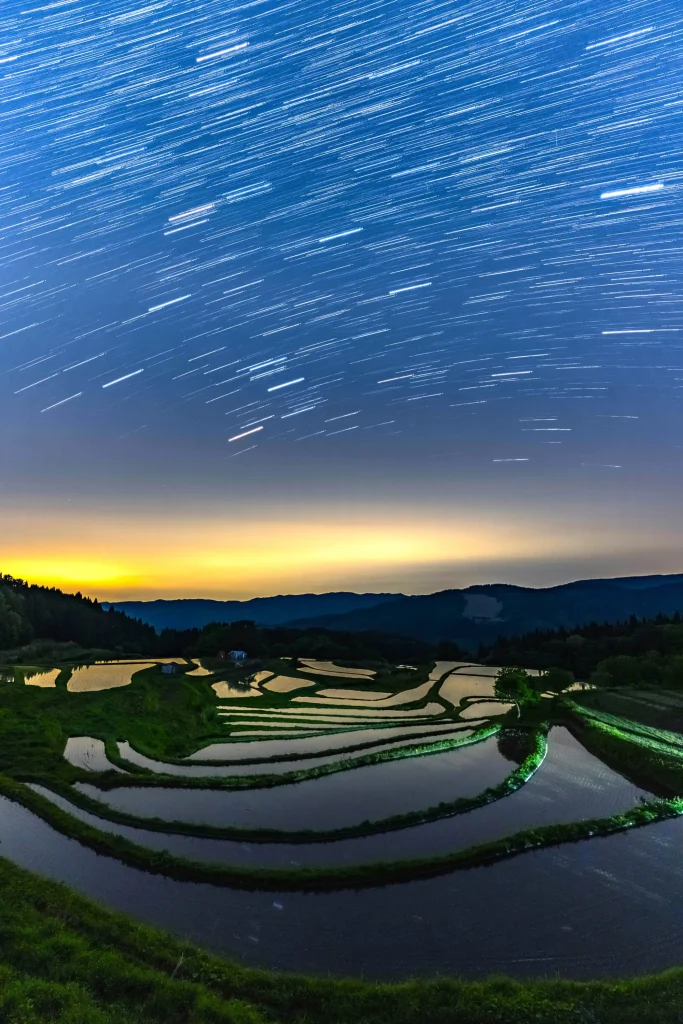
The cherry blossoms may be the initial invitation, but Yabu has so much more to reveal. After you’ve enjoyed the riverside views, we invite you to stay a little longer and wander deeper into the Oya district.
Beyond the flowers, you’ll discover a landscape of incredible natural beauty and traditional townscapes that feel frozen in time. From the historic silk-farming “Yōsan-nouka” houses in Osugi preservation district to the quiet mountain trails, Yabu offers a chance to slow down and breathe.
Latest Posts
- 🌿 Escape to Yabu: An Exclusive 2-Day “Slow Travel” Monitor Tour
- 🌸The Best Cherry Blossom Spots in Yabu
- Chasing History: The 1,800-Year “Great Run” of the Ohashiri Festival
- YABUSHIBUYA: The Ultimate Name-Flip Pop-Up in the Heart of Tokyo
- Featured Event: TANIGAKI FES Celebrates 10th Anniversary on Nov 22-23
Activity Arts Campaign Community Events Festivals Food History and Culture Nature Onsen Outdoors Shrines and Temples Ski Snowboard Souvenir Stays Tradition Winter
Leave a Reply